

From the Archives | Duluth: A Study in Blending Urban, Industrial, and Nature
Revisiting Urban Issue(s) 2023 Road Trip

From the Archives: First published in September 2023, we’re revisiting this series from 2023’s Road Trip through the Midwest for anyone who missed it—or just needs a thoughtful reread.
Duluth was a trip of good fortune and happy accidents.
I became interested in Duluth after reading an article in the New York Times earlier this year about climate migrants relocating to the lakefront city. It was particularly interesting to think about an influx of coastal talent bringing their wealth and skill sets to a historic manufacturing town. How would it change the economic opportunity for Duluth and who stood to benefit?
I pulled into the city and immediately texted a friend, “holy WOW this is like…. ACTIVELY industrial”. That really did take me by surprise. I was imagining the Detroit levels of industrial which have sort of been tucked away and removed from the riverfront. No - Duluth’s shipping industry is on full display as you cross the bridge from Wisconsin. With this in view, I was very curious to see how these big city transplants fit in and what they were attracted to. By a stroke of luck, I found myself behind one of these transplants in line at the Dovetail Cafe (we will come back to this place). Here’s how the conversation went:
Person 1: So… you’re from like Colorado, right?
Person 2: Yeah, we moved here not that long ago.Person 1: …..why?
Person 2: Basically we moved to Colorado 6 years ago and it was awesome, but in the last couple of years it’s been hard to afford the cost of living. And the whole reason we moved there was to be closer to the outdoors, but everything is a 2 hour drive from us and there are already 500 people there when you get to the trail. I bought an electric bike and a canoe with the money I saved on rent when I got here and use it all the time.
Person 1: Woah.
I, too, quietly said “woah” and immediately wrote this down in my notebook. Later that day I stopped into Trailfitters to pick up a pair of boots and was chatting with the guy pulling sizes for me. I asked him about his Duluth origin story and he told me that he grew up in Illinois but moved to Duluth a couple of years ago to make a career in mushroom foraging. He said it was affordable, there were tons of outlets for him to learn about mushrooms, and many places in close proximity to forage. A professional mushroom forager! Imagine!
Respite on an Urban Trail
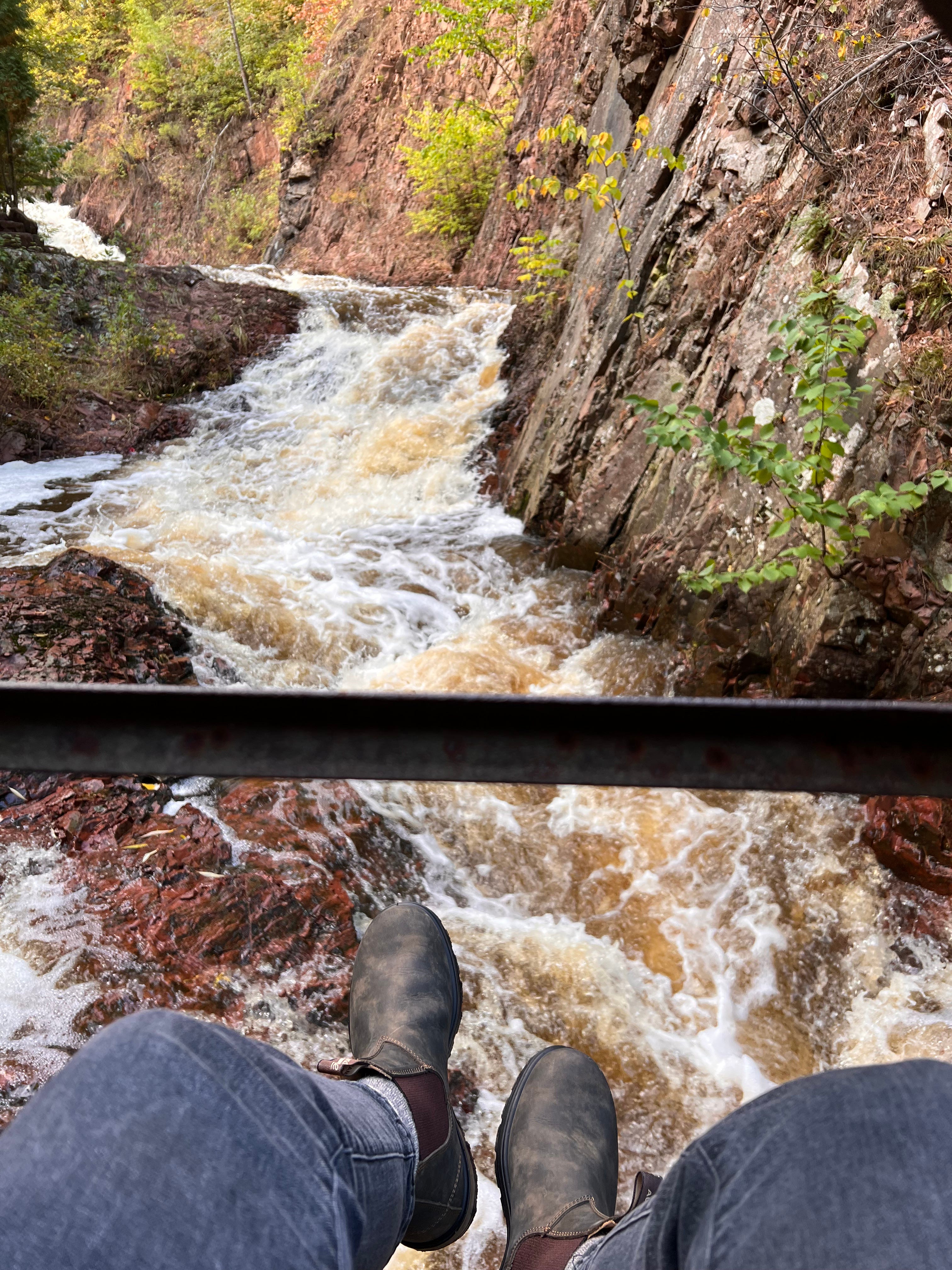
This reinforced my conviction to see these said outdoor assets that are drawing people from all over the country. I put on my new boots and headed up to Tischer Creek Falls, an incredibly beautiful park inside the Duluth city limits. I came upon it when I opened my maps app and was searching for a big patch of green. It was less than a 10 minute drive from the urban core of Duluth up to the trail entrance. I had no idea what to expect but WOW, what a great surprise. Within my 45 minute walk I crossed four bridges with waterfalls beneath each one. The falls were particularly full from the 8” of rain Duluth got earlier this week.
The integration of Tischer Creek is a masterclass in blending urban places and natural assets. My sense is that Duluth really, deeply understands the connection between nature and mental wellness. A native Duluthian might shake their head, disagree, and point to all of the things that could be different about the city - who knows. I just kept thinking about Detroit and how far we have to go in making and fostering this connection between the outdoors and positive physiological health outcomes. I wished for Duluth’s natural assets and it’s forward thinking leader who, back in the 80s, decided it was worth the investment to put pedestrian bridges across Tischer Creek and make it into a public space.
Here’s my final anecdote on Duluth’s blend of industrial and natural:
Per the recommendation of my airbnb host, I had coffee this morning at Back Alley, Duluth’s surf shop. Yes, a midwestern surf shop. Believe it or not, there are a great number of very brave people who surf Lake Superior in the fall and winter when the waves are best. It’s a great little coffee and surf shop but what really got me is the location. Back Alley is on an industrial road with active heavy industrial use surrounding it. That seems to really only add to the charm of it. Next time a land use enthusiast tells me that heavy industrial simply cannot co-exist with neighborhood retail, I have a really good reason to disagree.
The Duluth Folk School
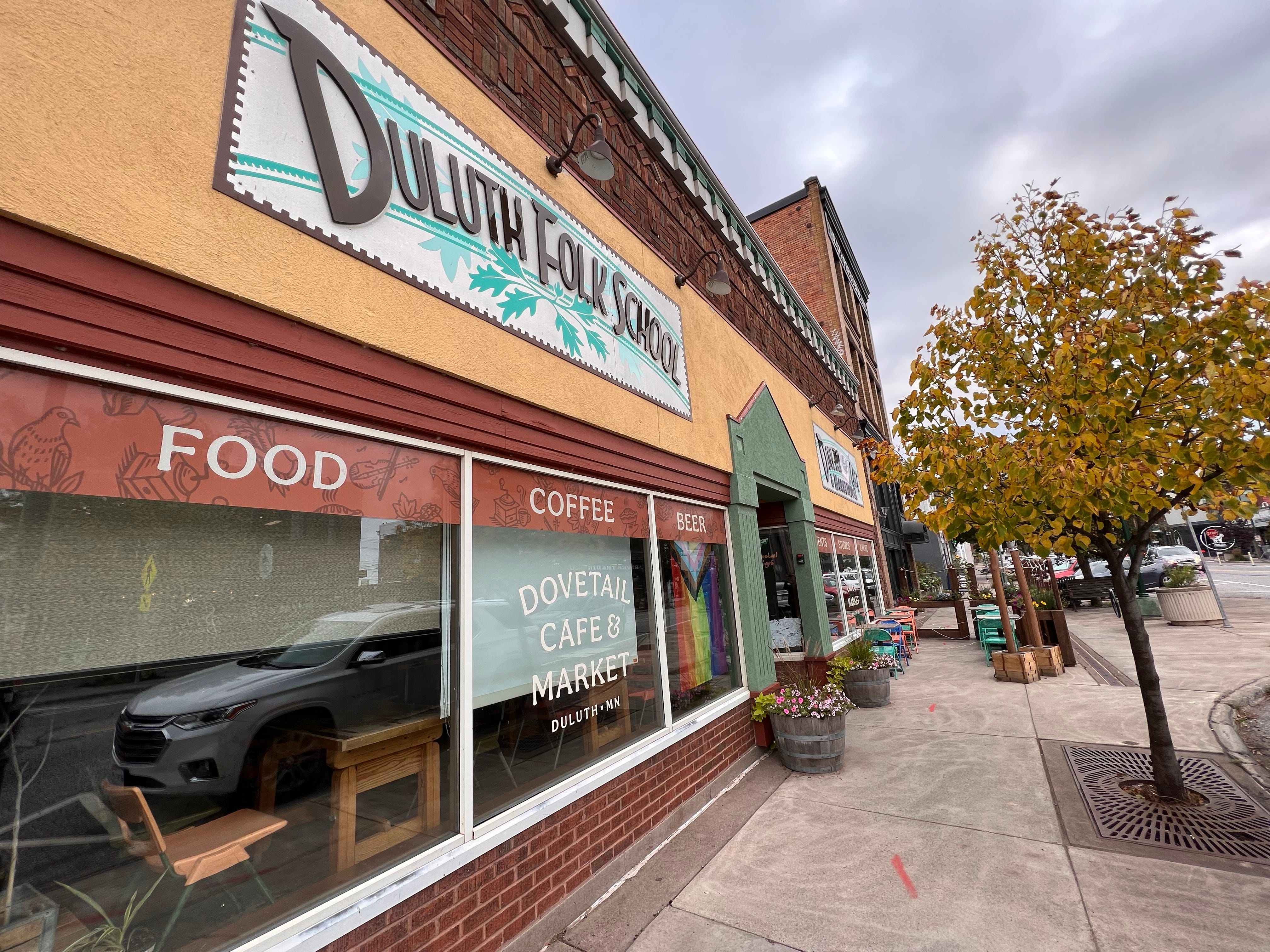
I mentioned up top that I overheard this Colorado transplant telling her story in line at the Dovetail Cafe. Well, the much cooler thing is that the cafe is part of the Duluth Folk School. Folk schools are something I have been wanting to write about for so long so I was very, very happy when I accidentally found this one and spent nearly the entire day there.
Folk schools are wildly under appreciated community assets and I wish more people knew about them! Rather than describing the folk school concept myself, I thought it wise to look to the good people of St. Croix, MN to educate us.
“The folk school tradition traces its origins to Scandinavian countries, with NFS Grundtvig of Denmark coining the term 'schools for life' as part of his philosophy of education, and of his vision for strengthening and empowering communities.”
- Marine Mills Folk School, St.Croix, MN
Here’s what I love most about the concept: “schools for life”. For life as in going to school until you are 100? Or for life as in equipping people with practical life skills? Both, of course! Folk schools are a wonderful way to support inventors and foster a culture of collaborative learning and building. They typically offer classes in traditional craft like blacksmithing, timber framing, woodworking, fiber arts, ecology, outdoor skills, among many other things. Some of these things might seem outdated off the bat, but here’s why I think they are important in modern, urban places:
Folk schools build community between people and their place, fostering a real connection to society. Many makers source their materials locally and develop a hyperlocal supply chain, bolstering the economy.
Having neighbors who know how to do things and make things with their hands is so very important. Imagine living in a rural community or even an urban city that has been interrupted by war or natural disaster. If our supply channels go down or become unpredictable, it leaves us to figure some things out on our own. Folk schools teach these skills which, ultimately, lead to more sustainable lived environments when people can rebuild with their own hands.
They are hatcheries of invention. When you put clever, inventive people around other clever, inventive people, stuff gets made. This stuff turns into goods and services that fuel economic sustainability.
If you want to learn more about the folk school model, here’s an interview between Robert Grand of the John C. Campbell Folk School and Dawn Murphy, Vice President Of The Folk Education Association Of America. If you REALLY want to get into it, here is an academic paper on Folk Schools as Inspiration for Contemporary Democratic Peacebuilding.
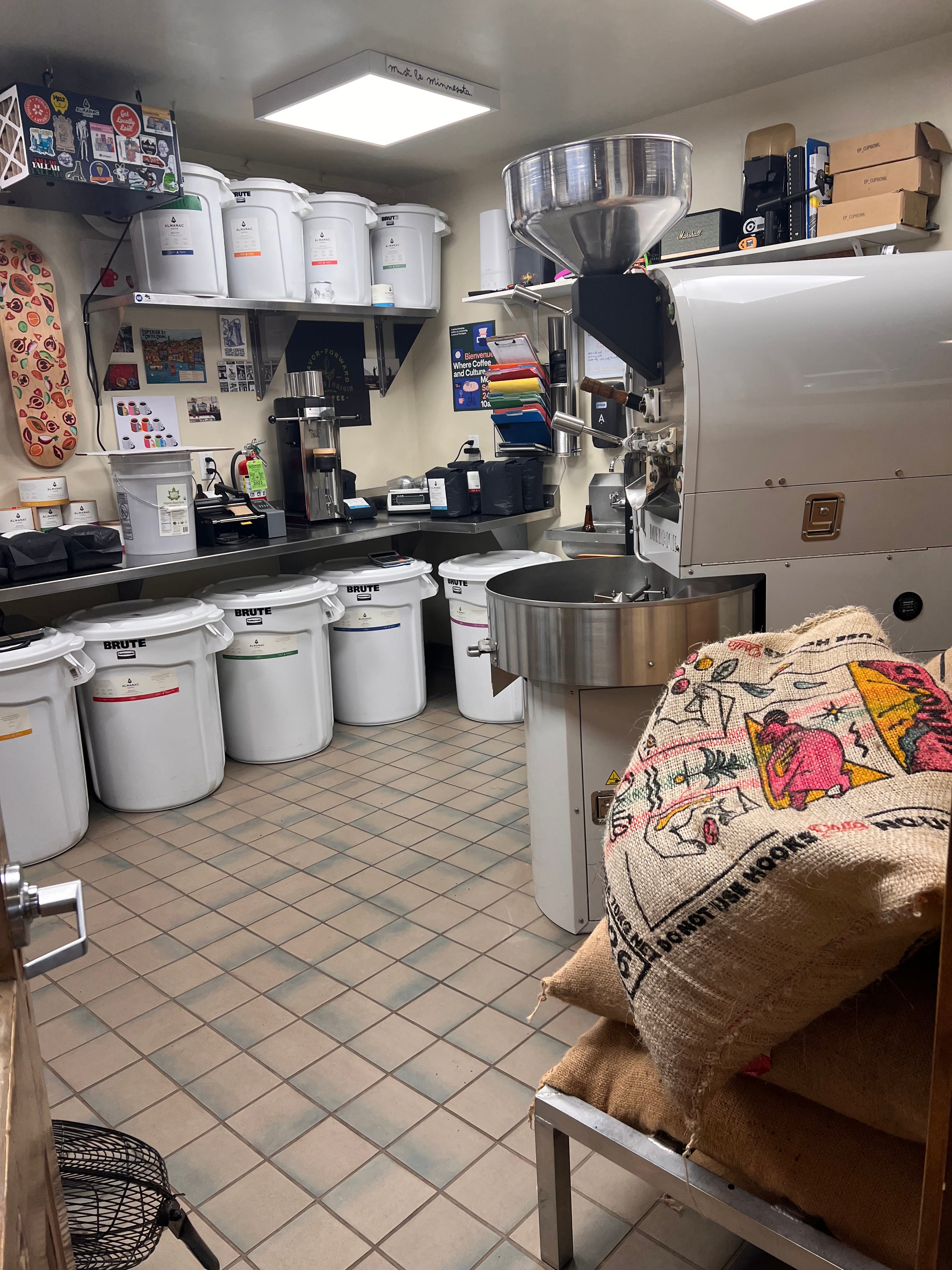
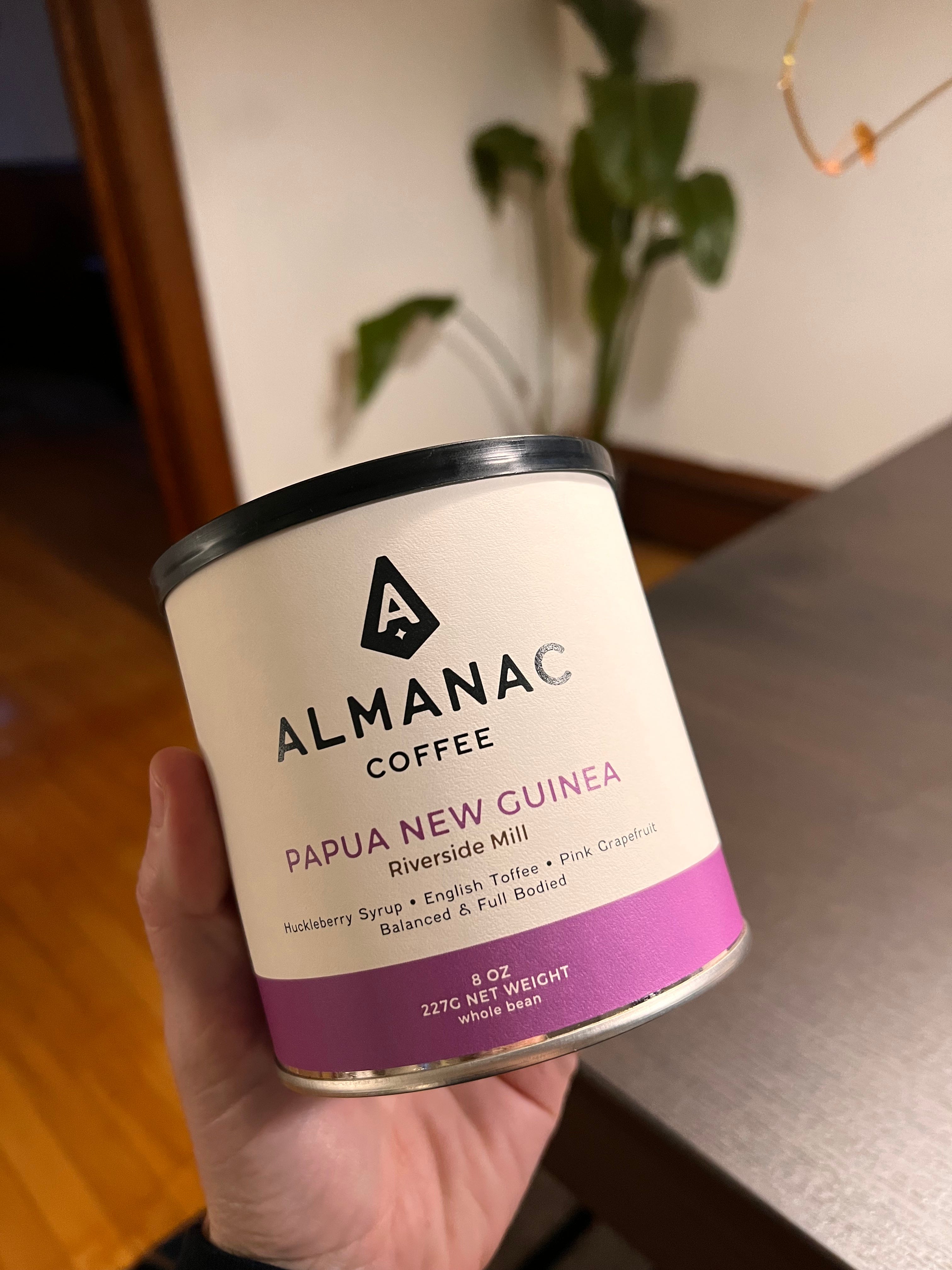
As I was meandering about in the folk school, I popped my head into the roasting HQ of Almanac Coffee and met owner and roaster Justin Wood. Justin was super generous in talking me through his process and what makes his beans unique, and even set me up with a bag of India - Karnataka - Ratnagiri Estate - Cavery - Anaerobic Natural. (The coffee nerds out there will understand and appreciate how unique this is). I love that the Duluth Folk School gives the cafe the opportunity to serve up fresh beans front of house while they are being roasted down the hall. Justin told me that Duluth is full of makers - no surprise based on the storefronts of small, independent businesses scattered through the city, the community boards chock full of flyers promoting events, art, music, and meetups, and the spontaneous conversations I had with makers.
I’m going to stop here because, once again, I must go explore Minneapolis so that I have something to write about on Friday! I am so grateful for the warm response to the first newsletter. I am having a blast and glad to have you all along for the ride!
Until next time,
Alex
This is still one of my favorite pieces you've published!